

by Jennifer Greene-Sullivan
This morning, I woke up with something sitting heavy on my heart, not in a burdensome way, but in a way that feels like it matters. It felt like something I pray, even if I do not yet have all the words. Liam and I begin our day in prayer together, and after he and his dad leave, I return to prayer and Bible study. Yet there are moments, like today, when I know there is someone and something I need to pray about, but I cannot seem to find the words. In those moments, I am reminded that not every burden is meant to be carried through language alone.
So instead of forcing words, I choose to be still. I pray in my prayer language, or I sit quietly, trusting that the Holy Spirit will intercede for me. Scripture reminds us, “Likewise the Spirit helps us in our weakness… the Spirit himself intercedes for us with groanings too deep for words” (Romans 8:26, ESV). There is comfort in knowing that God understands what I cannot express. In that quiet place, my thoughts began to turn toward Sophia.
Since she was a toddler, my second-born daughter has been a runner. I stayed in shape during those early years simply from chasing her through yards, parking lots, and ball fields. There were times when she heard me calling her name, yet she would hide and remain completely still. Even then, I understood that her silence meant something deeper. That pattern, though it changed over time, never fully disappeared.
As she grew into her tween and teenage years, her running became less physical and more internal. When she was making questionable choices, she would grow quiet and retreat into her room. I could sense when something was wrong, even when she refused to speak, and I would ask her to talk to me. Unfortunately, she would not open up. Her silence often spoke louder than her words ever could.

Recently, at twenty-one, that quietness returned again. She has spent more time away from home, and I have found myself attempting to pull conversation from her. Deep down, I sensed something was not right, but I convinced myself that she would be okay. I told myself that she is grown and capable of handling her own life. However, that assumption did not reflect the full truth.
She eventually came to me in tears, caught in a precarious situation and expecting my disappointment. She anticipated anger, rejection, and harsh words because of her decisions. However, that was not how I responded. I remained calm and spoke with clarity about the reality of her choices. I explained that as an adult, she is shaping the life she wants, and change would require her to walk closely with the Lord.
My response surprised even me in that moment. In the past, I would have reacted emotionally and allowed frustration to lead the conversation. That kind of response would not have helped her, and it certainly would have strained our relationship. This time, something was different within me. The calmness I felt came from a deeper place of surrender and trust.
Later, as I talked with Jesus about Sophia and our relationship, He gently revealed a deeper truth. The way Sophia runs and hides is very similar to how we, as believers, often respond to our own failures. After salvation, we still make mistakes, and instead of running toward God, we withdraw. We become quiet, distant, and hesitant to approach Him. That pattern of hiding is not new; it is as old as humanity itself.
The Israelites wandered in the wilderness, and Saul sought out mediums instead of seeking God. Peter boldly declared his loyalty and then denied Jesus three times. Each of these moments reflects the human tendency to run after failure. I have seen this pattern not only in Scripture but also in my own life. After my divorce, I allowed my grief to distort my understanding of God’s love for me.
My unrenewed mind convinced me that God could not love a divorced woman. As a result, I withdrew from the body of believers I had once loved deeply. I isolated myself and became vulnerable in ways I did not fully understand at the time. I allowed shame to separate me from the very God I longed to please. In doing so, I placed myself outside the safety of His presence.
Jesus describes this moment clearly in Luke 15:4, “What man of you, having a hundred sheep, if he has lost one of them, does not leave the ninety-nine… until he finds it?” (ESV). I became the one who wandered away. I stepped outside of the covering that was meant to protect me. Yet even in that place, I was never beyond His reach. His grace continued to pursue me. Thank you, Jesus, for pursuing me!!!
Now, having been forgiven, renewed, and restored, I can see the truth more clearly. God already knows every detail of our lives, including the parts we try to hide. He knows every thought, every failure, and every moment of weakness. Yet His love for us remains unchanged. That truth alone should draw us back to Him rather than push us away.
This week, we remember that Jesus went to the cross to redeem and restore us. He did not wait for us to become perfect before offering His life. He chose to sacrifice Himself for us while we were still broken. His love reaches into the very places we try to conceal. There is nothing about us that surprises Him.
Scripture reminds us, “If we confess our sins, he is faithful and just to forgive us our sins and to cleanse us from all unrighteousness” (1 John 1:9, ESV). God is not waiting to reject us when we come to Him; He is waiting to restore us completely. His mercy meets us in our honesty, not in our hiding. That is the invitation He continues to extend.
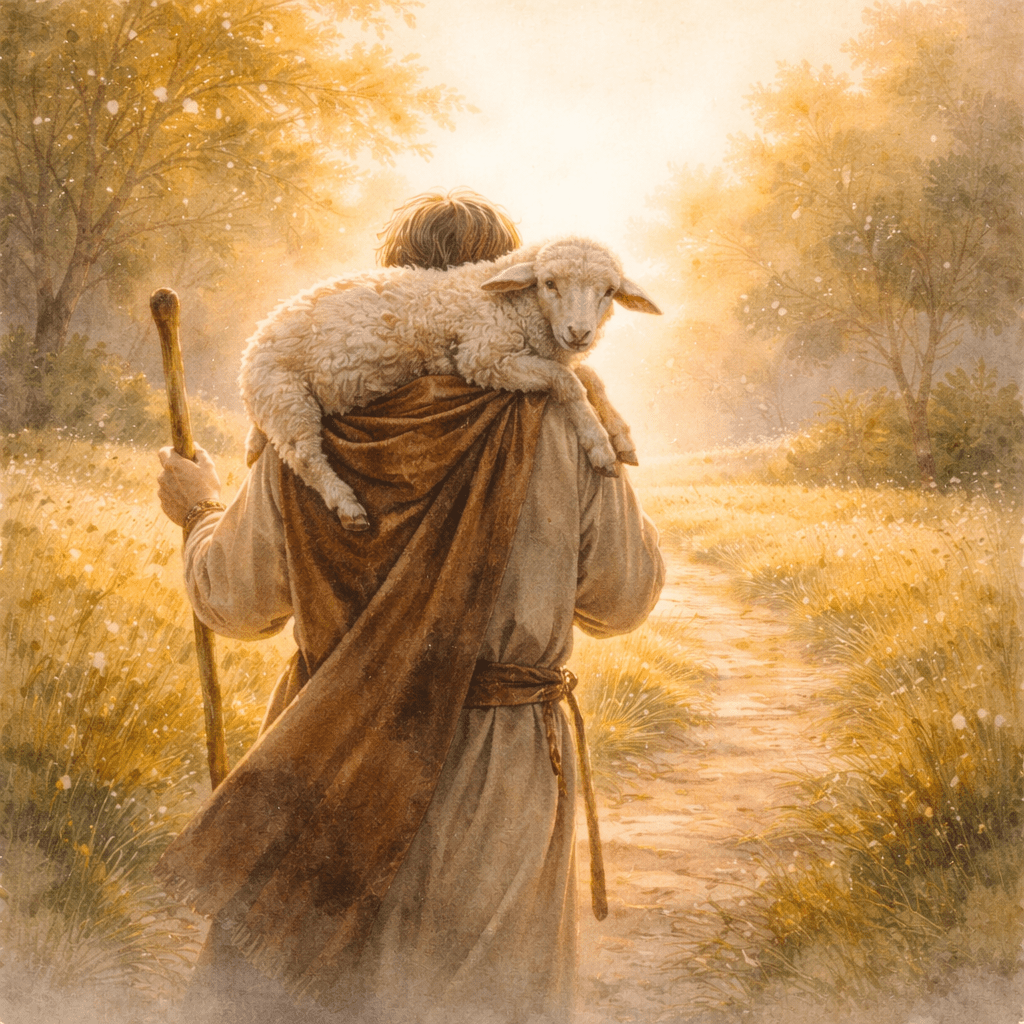
So I say this as both a mother and a believer: stop running and stop hiding from the One who already sees you. Come back to Him with honesty, humility, and trust. He is not standing at a distance; He is pursuing you even now. He left the ninety-nine for me, and He left the ninety-nine for you.
Be still and allow God to fix what you cannot. Let His grace meet you exactly where you are. Trust that His love is greater than your failure, and remember that restoration begins the moment you return.
Reflection
Where have you grown quiet before God?
Is there an area of your life where you have been running instead of returning?
What would it look like for you to come to Him honestly today?
Challenge
Take a few moments today to sit quietly with the Lord; do not rush to find the right words or the perfect prayer. Simply come to Him as you are and allow the Holy Spirit to meet you there. Write down anything He places on your heart, and choose one step of obedience you can take today to draw closer to Him.
Prayer
Father, thank You for seeing every part of me and loving me completely. Thank You for pursuing me even when I run and hide. Help me to come to You with honesty instead of fear, and with trust instead of shame. Teach me to remain in Your presence and to rely on Your Spirit when I do not have the words. Restore what has been broken, and guide me into the life You have called me to live. In Jesus’ name, amen.
#AgingEnglishMajor #FaithJourney #StopRunning #ComeBackToGod #GraceAndRestoration #Luke15 #Romans826 #1John19 #HolySpiritHelp #ChristianLiving #ReturnToHim #KingdomTruth
 The Aging English Major