by Jennifer Greene-Sullivan
My tenth graders think they are almost finished with their first essays of the year. This week, they are working on their conclusion paragraphs after spending several days developing introductions and body paragraphs. They can finally see the end of the drafting process, and I suspect some of them believe that once the last sentence lands on the page, the writing process will be over. I have already warned them that what comes next may be even more important: revision.
I expect a few groans when we get there because revision can be hard, even for experienced writers. We become attached to words we worked hard to put on the page, and changing them can feel suspiciously like admitting we did something wrong the first time. Yet revision is not an admission of failure; it is a willingness to look again at what we have created and ask whether it has become everything it could be. This weekend, while working on The Hidden Cove, I found myself living the very lesson I am preparing to teach my students.
When the Story Changed
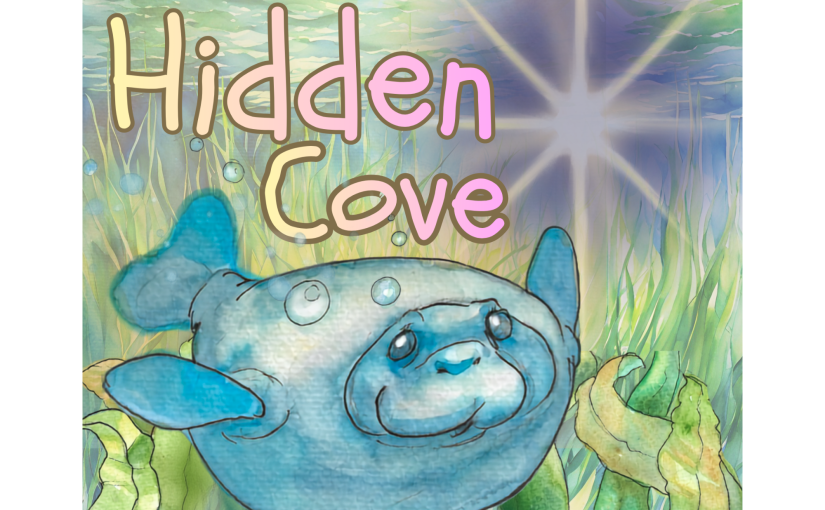
Marvin the manatee first came into my life two years ago when Sydney drew him for my birthday. Somewhere along the way, that little gray manatee became a stand-in for parts of my own story because Marvin, too, often found himself separated from the world he knew. He wandered through quiet waters, eventually discovering a hidden cove where he learned to listen to his Creator, explore unfamiliar places, and notice things he might otherwise have missed. During all that time when it seemed very little was happening, Marvin was growing.
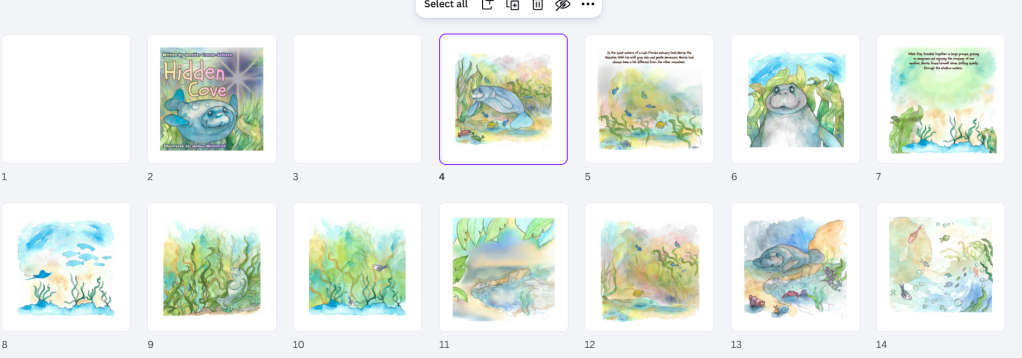
When I originally wrote The Hidden Cove, I explained much of that growth to the reader. I explained Marvin’s loneliness, what his Creator was teaching him, and how his isolation was preparing him for something he could not yet see. At the time, those words were important because they helped Joshua Wichterich understand the nuances of the story he would eventually illustrate. The manuscript allowed him to see not only what was happening to Marvin, but also why those experiences mattered.
Then Joshua illustrated the story, and this weekend I began placing those beautiful illustrations into the book before adding any of my words. For the first time in all the children’s books I have worked on, I laid out an entire story visually and simply watched what happened from page to page. Marvin swam alone while the others gathered together; he wandered through seagrass, discovered unfamiliar places, found the hidden cove, and eventually faced the storm. Without a single sentence from me, the pictures were already telling the story.
As I began adding my original words, something felt wrong, although it took me a while to understand why. My carefully written narration suddenly sounded like an adult standing beside a child, pointing at the pictures and explaining what everything meant. Joshua’s illustrations had already communicated so much of what my original manuscript had needed to say, which meant my words no longer had to carry the entire story. For perhaps the first time as a children’s author, I realized that I did not want to explain Marvin’s experience to children; I wanted to invite them into it.
Making Room for Wonder
That realization means I am revising The Hidden Cove, but not because the original manuscript was bad. In fact, it accomplished exactly what I needed it to accomplish at that stage of the process by giving my illustrator the emotional and spiritual framework beneath Marvin’s story. Now those nuances live in the water and the light, in Marvin’s expressions, and even in the physical distance Joshua sometimes places between Marvin and the other manatees. The illustrations have given me permission to say less so that the child can experience more.
I want to trust young readers enough to allow them to see Marvin alone and recognize loneliness without having a narrator name it for them. When Marvin hears his Creator, perhaps he does not need an explanation of everything that will eventually happen; perhaps he only needs the assurance that his Creator is with him. Marvin can continue exploring unfamiliar paths without understanding why any of them matter, just as children—and adults—often move through seasons whose purposes remain hidden from us. Then, when the storm arrives and familiar routes disappear, Marvin can discover that he knows the way.
If I resist explaining that connection ahead of time, something wonderful becomes possible for the child turning the pages. The young reader can remember the paths Marvin explored, recognize what is happening, and discover the significance of those earlier moments at the same time Marvin does. Instead of receiving the meaning from an adult narrator, the child participates in making meaning from the story. That space between what the book tells and what the child discovers is where I believe wonder begins.
The Hidden Cove
Perhaps I understand Marvin’s hidden cove differently now because I know something about hidden coves myself. For two years, I lived largely outside the educational world that had defined so much of my adult life after spending twenty years in the classroom. There were moments during that separation when I wondered what had happened to the person I had been and where I belonged now. Like Marvin, I had questions I could not immediately answer.
Something was happening in the quiet, though, even when I could not always recognize it. I wrote more, painted more, and learned to release some of the control I had spent much of my life trying to maintain. Most importantly, I learned more about who God is and who I am when familiar titles, routines, and expectations fall away. I remained myself throughout those two years, but I was also growing into someone I had not been before.
This year, I returned to the classroom, but I did not return as exactly the same woman who left it. Neither, however, did I leave that earlier version of myself behind because there were good things in her that were always meant to remain. I brought back the teacher who loves words and stories, the woman who believes teenagers are capable of thinking deeply, and the English major who still gets entirely too excited about a beautifully written sentence. Alongside all of those familiar pieces came the woman who had spent two years in the hidden cove, and she knows some different paths now.
Revision Is Not Erasure
Perhaps that is what I most want my students to understand when they finish their conclusion paragraphs and hear me say that their essays still are not finished. Revision does not mean the first draft was worthless, nor does it require us to discard everything that was good simply because something needs to change. We look again, preserving what belongs while moving, reshaping, expanding, or cutting what no longer serves the piece as well as it could. Sometimes we even discover that something we wrote earlier was necessary because it helped us reach the place where we could finally see what the writing wanted to become.
I wonder if God sometimes works in our lives in ways that feel remarkably similar. He does not erase every good thing that came before when He begins doing something new in us; instead, He continues shaping, teaching, and revealing. Sometimes He allows us to travel unfamiliar paths long enough to learn what we could not have learned while moving with everyone else. When the time comes to return, we do not have to become replacements for the people we once were because we can carry forward what was good while also carrying everything the hidden season taught us.
That is how I have begun to understand my own return to education. I am not the old Jennifer trying to become who she used to be, nor am I a completely new woman disconnected from the twenty years of teaching that came before. The old story remains, but now it carries more depth, experience, trust, and perspective because another chapter has been written into it. Perhaps revision is not always about becoming someone different; sometimes it is about becoming more fully who we were being shaped to become all along.
Reflection
I do not think I could have written Marvin’s story this way two years ago because perhaps I needed to explain the hidden cove while I was still living in one. Now I know something I could not have known then: eventually, you come back, and when you do, you bring the lessons of the quiet places with you. Sometimes the familiar road becomes blocked and everyone wonders which way to go, only for you to discover that the path you learned while wandering is exactly the path you need now. What once looked like isolation can take on an entirely different meaning when viewed from the other side.
This weekend, I am revising Marvin’s story while my students are writing their conclusions and believing they are almost finished. Soon, I will ask them to return to the beginning, read their own words again, and become willing to change something they worked hard to create. When they groan, I may be a little more sympathetic because I have been reminded that revision asks something vulnerable of a writer. We have to believe that changing our words does not diminish the work we have already done.
Perhaps that is the lesson Marvin, my students, and I are all learning at the same time. Revision can be uncomfortable because it asks us to release our attachment to what something was so we can discover what it still might become. Whether we are looking at an essay, a children’s book, or a season of our own lives, we may eventually realize that the first version was never wasted simply because it was not the final one. Sometimes revision is where we finally discover the story we were trying to tell all along.
Scripture to Sit With
“Behold, I am doing a new thing; now it springs forth, do you not perceive it?” — Isaiah 43:19, ESV
Challenge
Consider a season of your life that you have been tempted to label as wasted, interrupted, or lost. Instead of looking only at what disappeared during that time, ask yourself what you learned there and what unfamiliar paths you discovered. Perhaps God is not asking you to restore everything exactly as it once was, but to carry forward what was good while allowing what He taught you in the hidden places to shape what comes next. Give yourself permission to believe that revision does not mean erasure.
Prayer
Father, thank You that You do not waste the hidden seasons of our lives. Help me trust You when I cannot understand why familiar paths have changed, and teach me to recognize Your presence while I am still walking through places I do not understand. Preserve what You have placed within me while continuing to shape, deepen, and prepare me for whatever comes next. When I am tempted to cling too tightly to an earlier version of my story, give me courage to make room for the new thing You are doing and, through it all, keep wonder alive in me. In Jesus’ name, amen.
#AgingEnglishMajor #TheHiddenCove #Revision #WritingLife #ChristianWriter #Faith #NewThings #TrustGod #MakeRoomForWonder

